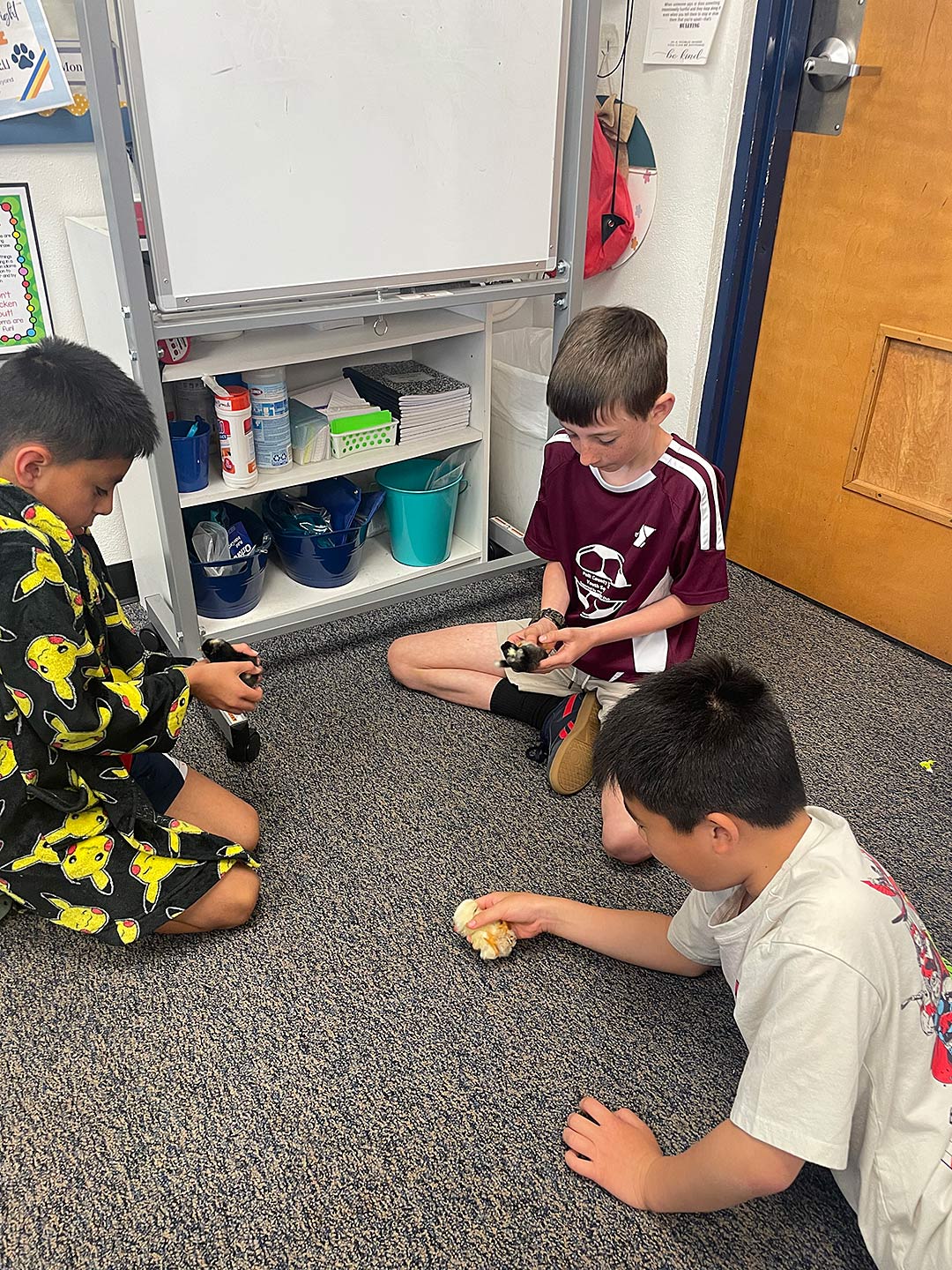
For 21 days, fourth-grade students in JJ Waddell’s class at Tryon Elementary School watched and waited. Then the eggs they had been monitoring began to crack, and new life emerged in their classroom.
The chick-hatching project brought students’ science studies on life cycles and animal habitats to life in the most literal way possible. Students observed the eggs daily, studying embryonic development and learning about the conditions needed for successful hatching.
As hatching day approached, excitement grew in the classroom. Students witnessed the process of chicks breaking through their shells and emerging into the world, experiencing firsthand the life cycle concepts they had been studying in their textbooks.
After the chicks hatched, students cared for the young birds, learning about the needs of newly hatched animals and taking responsibility for their care. The hands-on experience reinforced classroom learning about animal development and habitat requirements while teaching students about responsibility and gentle care for living creatures.
The project provided students with opportunities to observe biological processes in real time, connecting abstract scientific concepts to tangible, memorable experiences. Watching life develop from egg to chick gave students direct observation of growth, development and the beginning stages of an animal’s life cycle.